HIMSS TV is your Insider’s Guide to everything HIMSS. We are the world’s first online broadcasting network, focused on global innovation and how information and technology are driving change in healthcare.
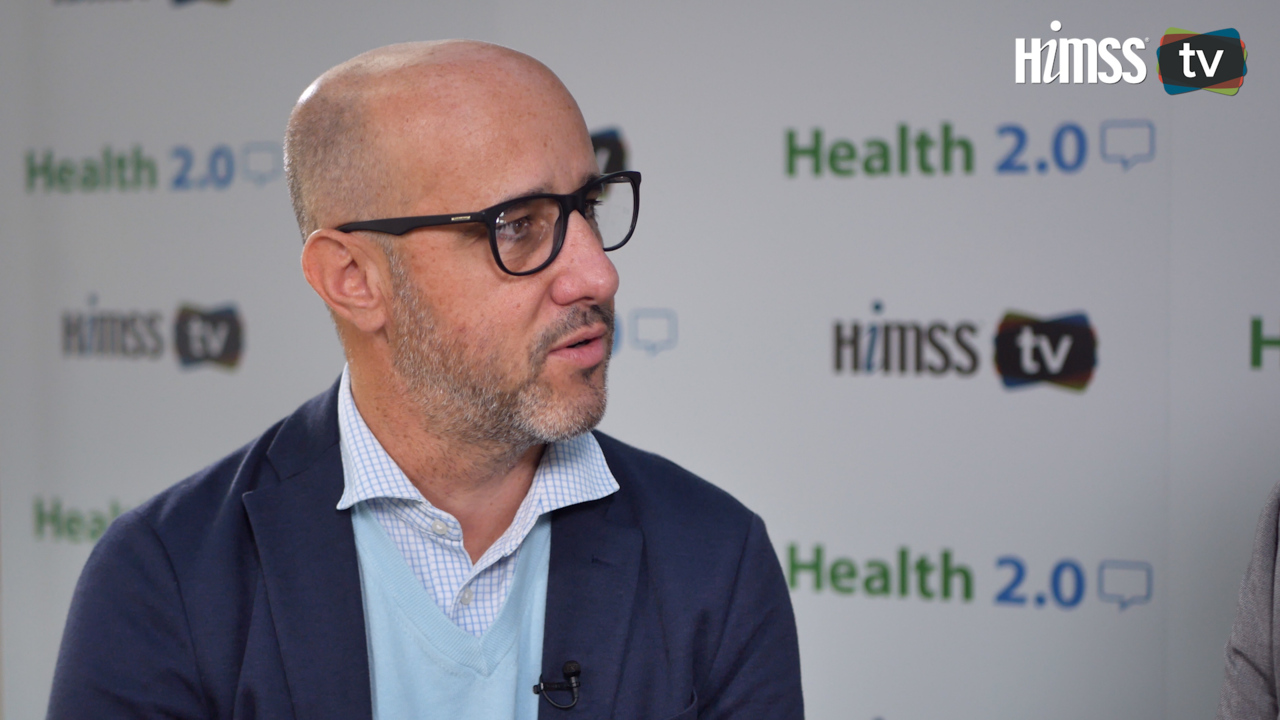
Mediktor CEO Cristian Pascual discusses how algorithms mine the company's database of symptoms and conditions in the first step for specific cases.
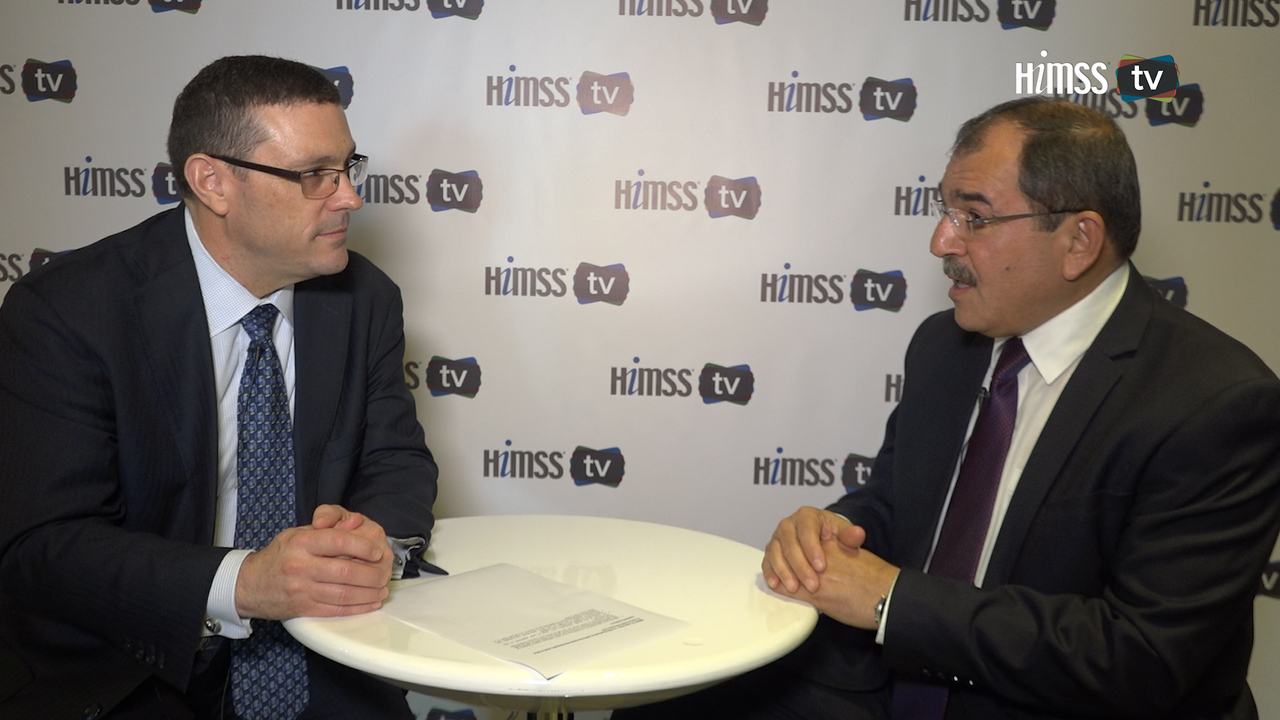
Artificial intelligence is "jumping information technology," but robots will still require human beings, according to Mahmoud Saleh El Halik, the head of Health Informatics at Latifa Women and Children's Hospital.
Ali Parsa, Babylon Health CEO, talks about the AI technology powering the company's service and his mission to deliver access to digital health tools to everyone throughout the world.
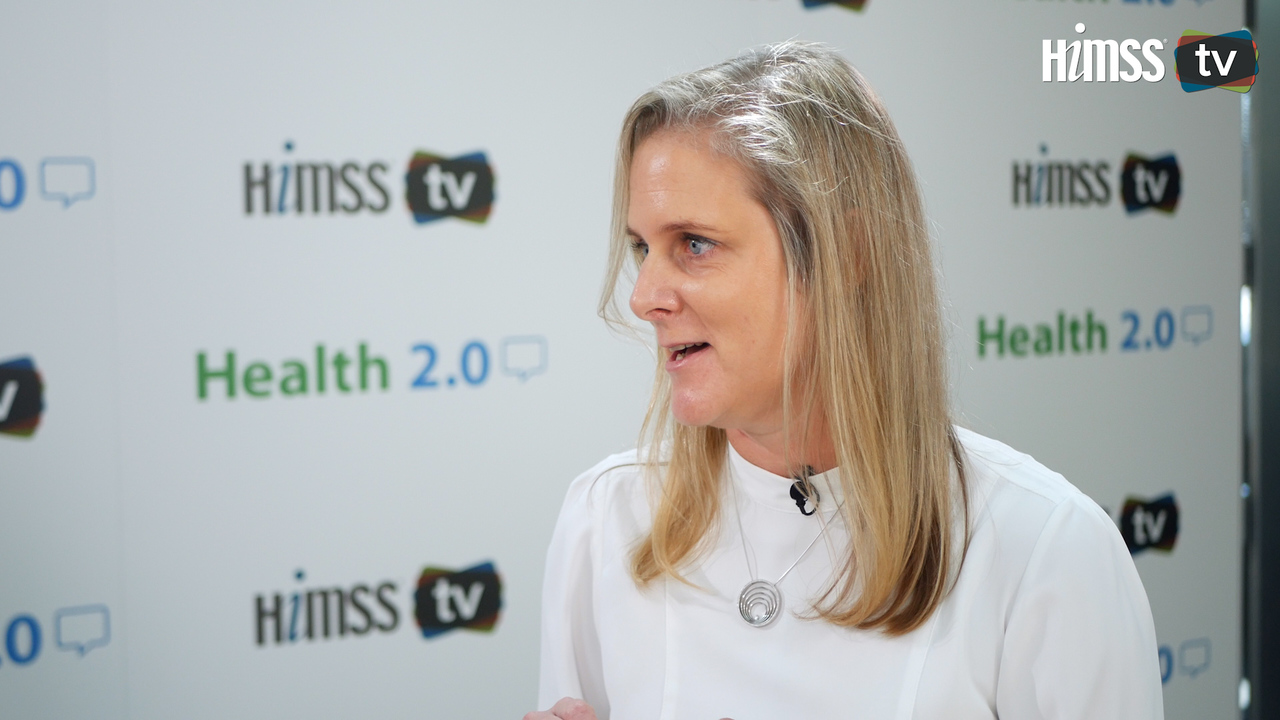
Emma Cartmell, founding partner at VC firm Cartmell LLC, on what artificial intelligence can do today, and how healthcare is still trying to work out the practical applications for improving quality and reducing costs.
Cigna Ventures Senior VP Tom Richards discusses the insurer's venture capital unit's focus on digital health, care delivery and advanced analytics technologies.
Esteban Rubens, Global Principal for Enterprise Imaging at Pure Storage, on how data hubs can enable artificial intelligence research and actionable insights by bringing together different sources of data and help reduce organizational data silos.
Josh Gluck, VP of Global Healthcare Technology Strategy at Pure Storage, says that artificial intelligence has gone through a hype cycle, and now there is a realization of where AI can have the most impact, especially in the field of radiology.
Dr. Nares Damrongchai, CEO of the Thailand Center of Excellence for Life Sciences (TCELS), discusses breaking down silos to bring together different agencies doing advanced work in areas such as genomics and AI to achieve greater goals.
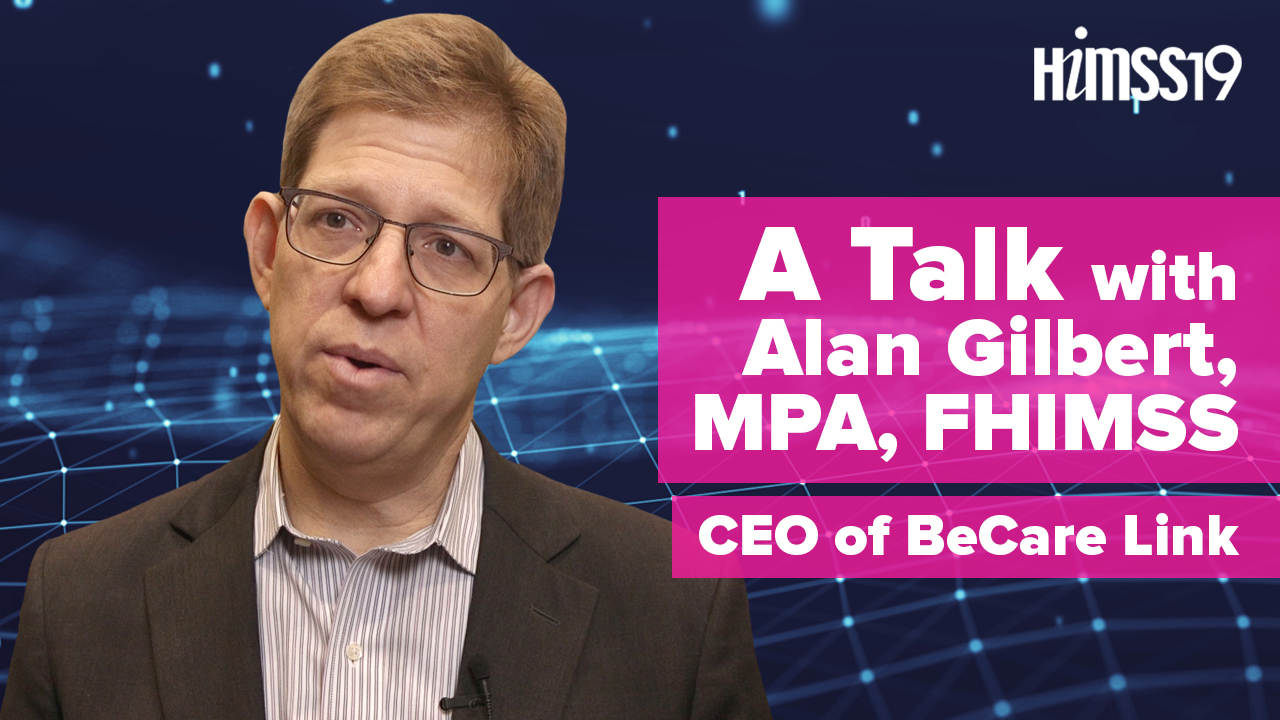
Artificial intelligence can predict disease progression for MS patients – helping improve care, lower costs and decrease hospitalizations, says Alan Gilbert, CEO of digital therapeutic company BeCare Link.
In a traditional model, research to bedside takes an average of 17 years. With the advent of new technologies, including machine learning, that needs to change to a shorter timeline, says Ian Z. Chuang, chief medical officer at Elsevier.

The industry is on the precipice of making fundamental improvement in population health with machine learning models, says Dr. Chris DeRienzo, Chief Quality Officer at Mission Health.
Putting AI to use in the clinical setting requires curated data, supercomputing infrastructure and the ability to model algorithms on neural networks, says Jörg Aumüller, head of digitalizing healthcare marketing, Siemens Healthineers.